
The Engine
of Precision.
BrightVera isn't just a wrapper; it's a high-performance orchestration layer. We've eliminated the friction between hardware potential and software execution, delivering a suite of tools designed for users who treat every millisecond as a mission-critical asset.
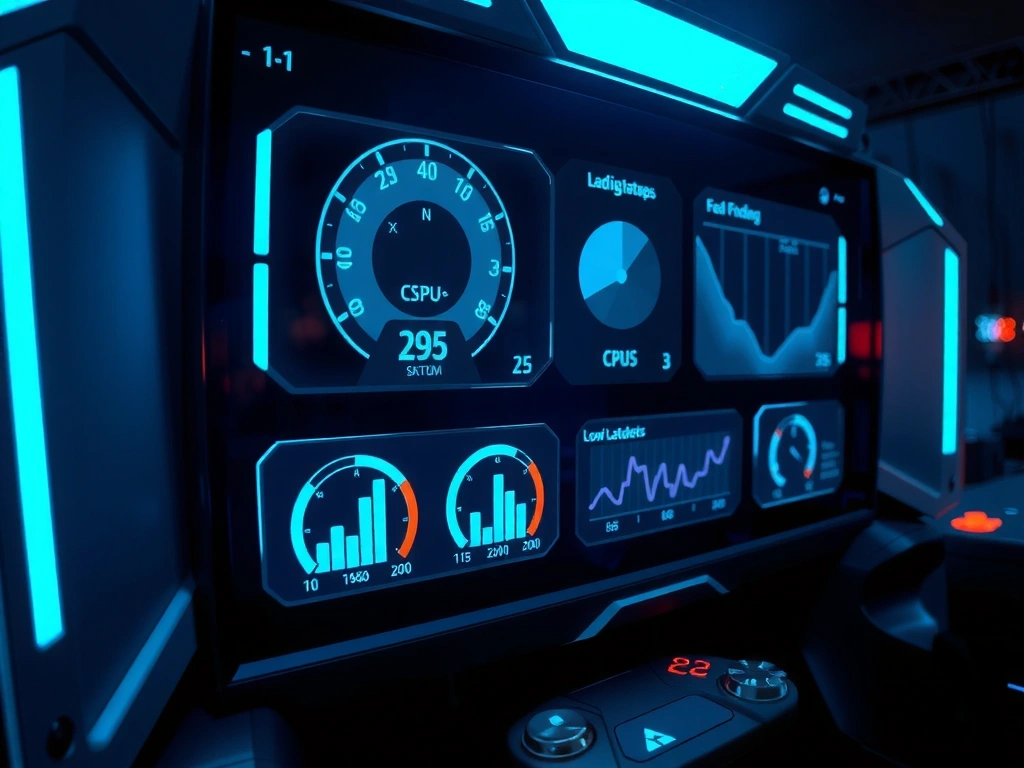
The Unified Command Center
Stop alt-tabbing to check your thermals. Our dashboard aggregates high-fidelity telemetry in a non-intrusive frosted-glass overlay that adapts to your game's UI layout automatically.
Input Zero Logic
Our core engine executes a separate polling thread for input devices, bypassing typical OS-level queuing issues. In fast-paced competitive FPS titles, this translates to a 15% reduction in perceived click-to-motion latency.
Resource Shielding
Intelligent core-pinning prevents OS background updates from stealing cycles from your primary rendering thread. We prioritize frame pacing over absolute FPS to eliminate stutter.
VIEW CORE ARCHITECTURE
Designed for Reliability,
Optimized for Immersion.
Software bloat is the primary enemy of immersion. Most "optimizing" tools actually add more weight to the system stack, creating a paradox where the performance gains are negated by the tool's own resource footprint. BrightVera was built with a C++ foundation, maintaining a sub-50MB RAM footprint even during heavy replay analysis.

Fig 4.2 — Recursive Latency Minimization Heuristics
Our Replay Analysis module operates asynchronously. While you focus on the next round, the system parses the previous session's memory buffer, identifying frame-variance spikes and heatmaps of player movement. This data is stored locally, adhering to our privacy-first philosophy—your performance data is yours alone.
BrightVera Deployment Criteria
We Optimize For:
- Continuous frame-time consistency (Stutter elimination)
- Precision input polling at 1000Hz+ rates
- Data transparency and local-only telemetry storage
We Sacrifice:
- Social features / Forced community integration
- Third-party advertising or "Affiliate" content
- One-click "Magic Boost" buttons (We provide real tools, not fake toggles)
Technical Capabilities Matrix
Precision Telemetry
Sub-millisecond data scraping for GPU utilization, VRAM swapping, and thermal throttling detection.
Sync Harmonization
Dynamic adaptive-sync monitoring to match software output with monitor refresh rates in real-time.
Data Sovereignty
Zero-cloud architecture. All logs, replays, and presets remain on your local hardware by default.
Preset Vault
Secure JSON-based configuration sharing for specific hardware profiles and pro-level setups.
Instant Replay Buffer
High-bitrate local buffer recording that consumes less than 2% of total CPU cycles on modern chips.
Holographic Overlays
SVG-based interface elements that scale perfectly to 4K and 8K resolutions without pixelation.
Implementation Pitfalls
The "Universal Booster" Myth
Avoid apps that claim to double FPS with one click. Real performance gains come from process priority management and driver optimization, not magical software switches.
Overlay Interaction Conflicts
Using multiple overlay tools (e.g., streaming software + performance monitors) can increase API call latency. We recommend using BrightVera as your singular aggregate layer.
Thermal Blindness
Players often push high frame-rate caps without monitoring thermals. Software can only optimize so far before hardware throttles—always use our thermal limit alerts.
Strategic Trade-Offs
Every engineering choice has a cost. We are transparent about where we prioritize focus in our development roadmap.
Visual Fidelity vs. Overhead
We prioritize low-pixel-density HUD elements. While they may look less "cinematic," they ensure the underlying game engine receives max CPU bandwidth.
Update Frequency vs. Accuracy
Our metrics refresh at 500ms intervals by default. Lowering this to 1ms increases precision but can introduce micro-stutter in the frame pipeline.
Compatibility vs. Native Features
We support DirectX and Vulkan as separate modules. While this increases app footprint, it allows for deeper hooks into the rendering pipeline for better optimization.
Expert Verdict
"Technical advantage isn't found in proprietary magic; it's found in the removal of systemic inefficiency."
The BrightVera platform optimizes for the 99th-percentile frame-time. While we aim to improve performance across all hardware, local hardware thermal limits and legacy architecture remain the baseline ceiling for any software optimization.
READY FOR THE NEXT LEVEL?
Updated JAN 2026 | VER 9.2-STABLE